
Ask most people when to visit Nitmiluk and they’ll tell you the Dry. Fair enough. Clear skies, cool nights and every swimming hole open. But anyone who has spent time here as the seasons change knows the park has another side, and some of us think it’s the best one.
By October you can feel it coming. The mornings are warm before the sun is properly up. The afternoons get heavy and still. Big clouds build out over the escarpment, and some evenings they break into lightning shows that light up the whole sky. And the cicadas start singing.
The place of the cicada
That sound means a lot here. Long ago, the Dreaming figure Nabilil camped at the entrance to the gorge. It was there that he heard the cicadas calling, nit, nit, nit, and gave this place its name: Nitmiluk, the place of the cicada.
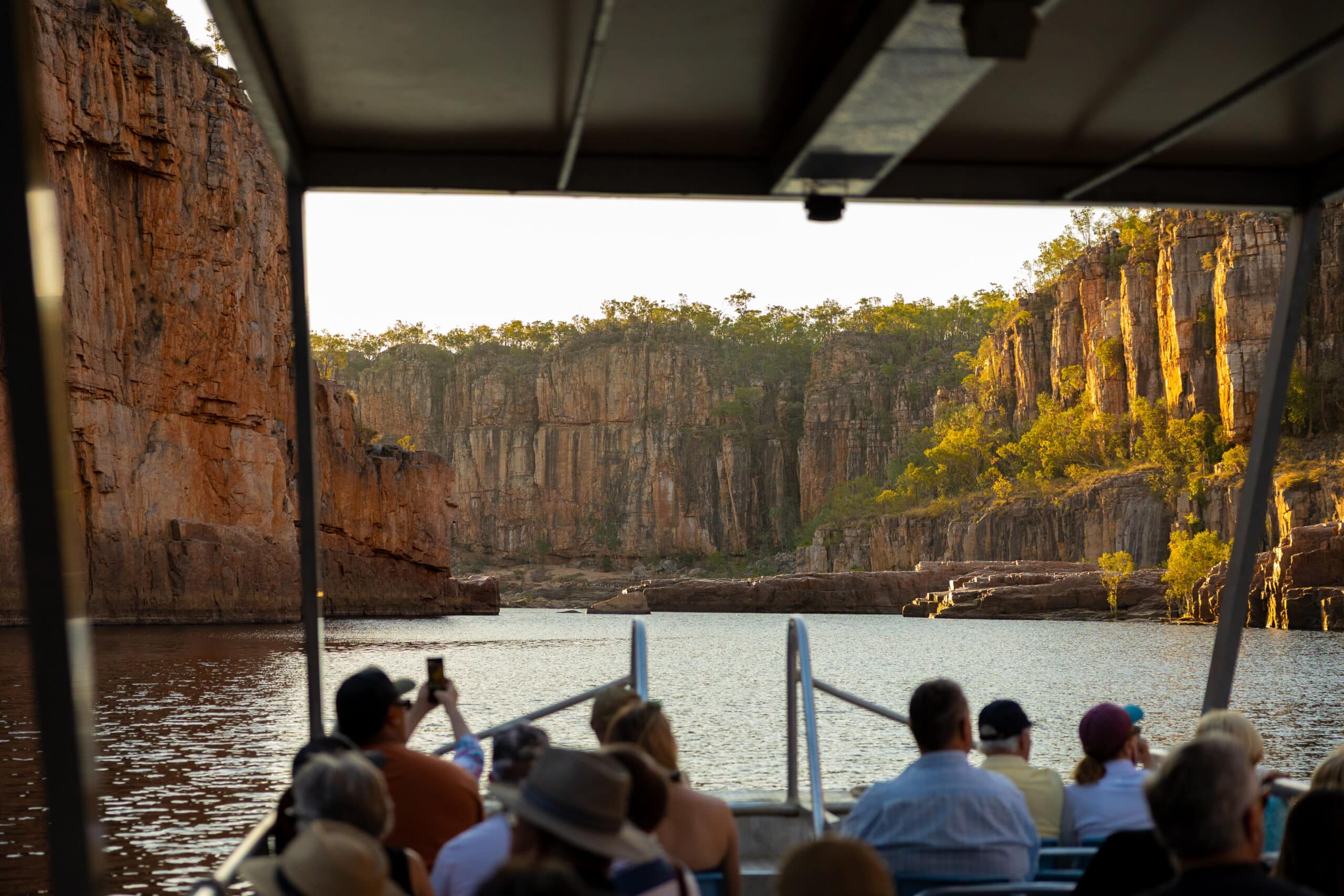 Photo: @sunnydaysadventureclub
You’ll hear that story, and plenty more, out on the water. It’s where our Nit Nit Dreaming 2 Gorge Tour and Nabilil Dreaming Sunset Dinner Tour take their names, and it’s a good reminder that this gorge has been known and cared for by Jawoyn people for a very long time.
More than wet and dry
Visitors tend to think of the Top End in two seasons. For Jawoyn people, the year is read much more closely, through the changes in the weather, the plants and the animals.
In October we’re in Jungalk, the build-up, which runs from September through to November. It’s the season of big thunderstorm clouds and lightning, when the cicadas sing in the rain.
After that, Guran arrives in December with the monsoon, bringing the green season and waterfalls flowing off the escarpment. Jiyowk, in January and February, is vibrant green, with waterfalls everywhere. Through March, April and May, Bankarrang clears the clouds away, blue skies return and bush foods are plentiful. Then comes Malapparr, from June to August, the Dry: cooler weather, no rain and clear blue skies.
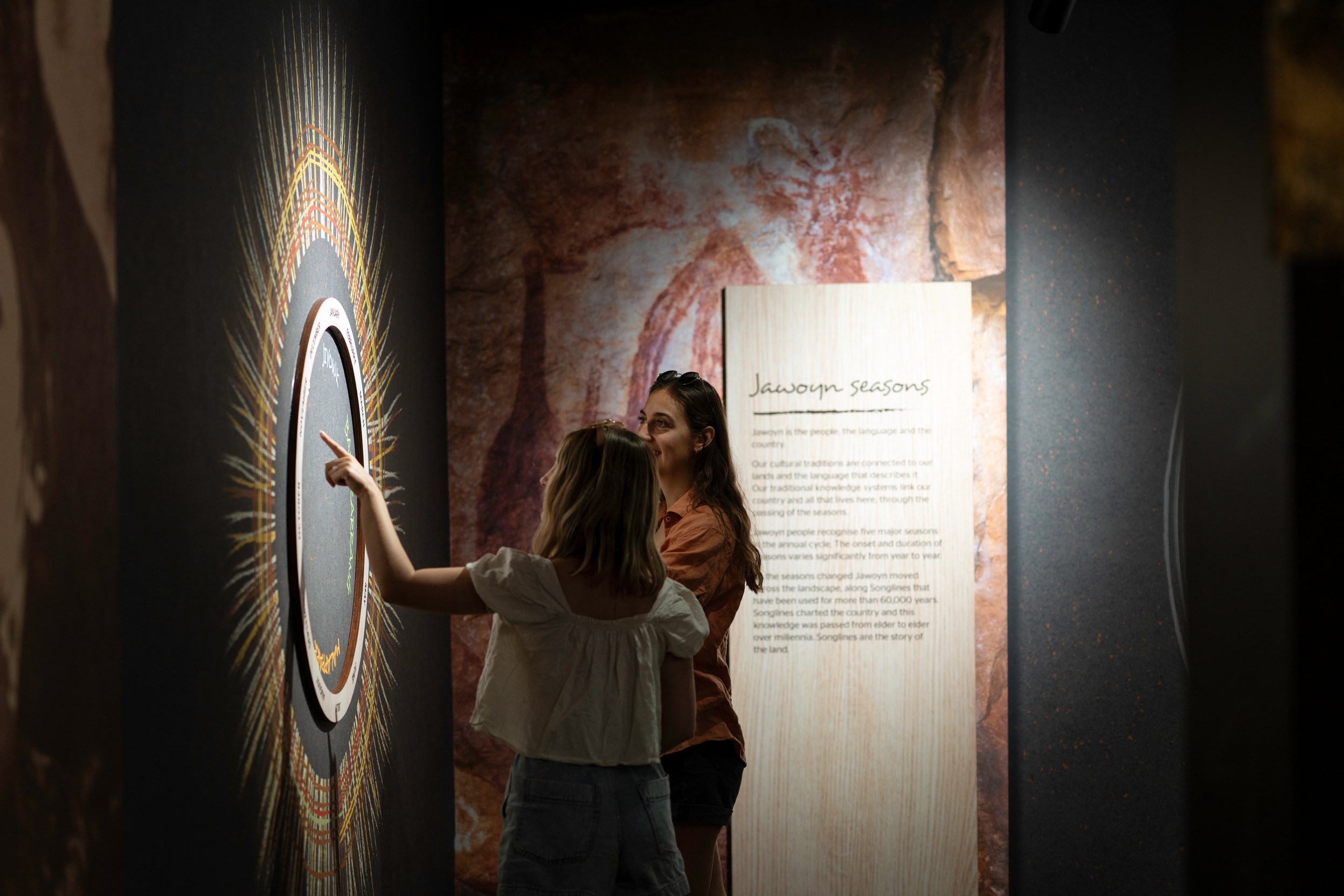
The deep pools of the gorge are home to Bolung, the rainbow serpent, and are treated with great respect. Understanding the country this way changes how you see it. The gorge you’d visit in July feels completely different by December, and each version is worth seeing.
What the rain brings
When the first big storms arrive, the change is fast. Within weeks the country turns green. Dry creek beds start running again. Waterfalls that were barely a trickle in September come back to life and pour off the escarpment. The river rises and darkens, and the gorge walls look richer than ever against grey storm skies.
It’s quieter too. There are fewer people in the park, more room on the boat and a slower, easier pace around the visitor centre.
Our Nit Nit Dreaming 2 Gorge Tour runs all year round, and the wet is a beautiful time to do it. You cruise through the first gorge, then take a short 400 metre walk at the transfer point to a second boat waiting to carry you into the second gorge. Along the way, our cultural guides share their knowledge of the plants, animals, Dreaming stories and culture of this place. With water running down the walls and the country at its greenest, it feels completely different to the Dry, and no two trips are ever quite the same.




Leave A Comment